
The QueensLink Compromise
a busway preserves the option for future rail

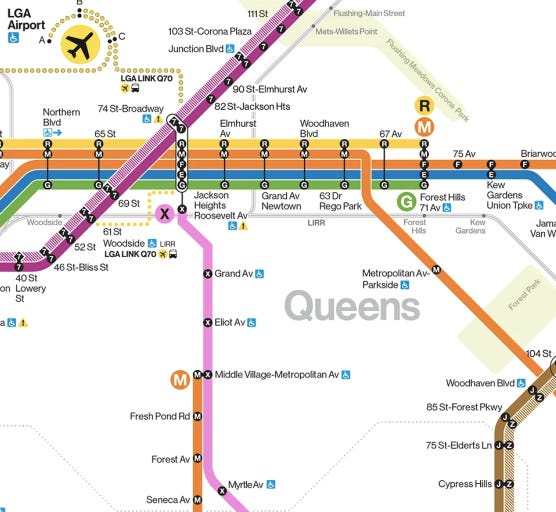
QueensLink would have been a signal of confidence in New York City's future. By reactivating an abandoned rail corridor, it would have connected southern Queens to the subway and complemented the future Interborough Express, giving Queens something closer to the network Manhattan already takes for granted. That network is why I supported it: every station added to a connected system creates value beyond its own ridership, because it links to every other station in the city.
In May, the Mamdani administration, which had supported QueensLink during the mayoral race, told advocates it now supports the alternative park proposal, QueensWay, which is expected to break ground by year's end. Instead of restoring rail, the corridor would become something closer to the High Line, with no transit component beyond a bike path.
I wanted the train, but, after building a model for a retreat about the next 100 years of NYC, I think I understand, at least from a risk-minimizing / pragmatic point of view, why the administration came to this decision. Rail on this corridor means three to six billion dollars and probably more than a decade before a single rider is served. Any mayor who starts the project will experience only the headaches from construction delays / rising costs and wouldn’t see any of the benefits during their administration. They would take all the blame and a future mayor would be the one at the ribbon cutting.
Fortunately, the choice doesn’t have to reduce to rail-or-park. A third option captures much of what QueensLink promised, including a real share of that network value, at a fraction of the cost, on a timeline measured in years instead of over a decade, and it is the only option that keeps the door open for rail later on.
Under the model’s default assumptions, rail eventually serves more people per year than a busway alone, but it loses a crucial decade before opening. A busway-plus-bike corridor begins serving people in years two to four, costs roughly $145M rather than billions, and remains competitive with rail on discounted person-years even over a century. Its advantage is not that buses are better than trains. It is that a preserved right-of-way can deliver useful transportation now while keeping the rail option alive.
That is the real shape of the choice. A busway on a preserved right-of-way is a rail line waiting for its ridership case. A park forecloses it, because cities do not un-build beloved parks. The busway is the only option that doesn’t require a correct forecast about southern Queens: it wins if the city stagnates and keeps rail open if it booms. The park works only in futures where this corridor never grows, and if that is the city’s bet, it should be made in the open rather than arrived at by default.
The ask is that the park the city is about to build keep a transit envelope in its design: the busway now, and the option for rail conversion later. I still believe New York will eventually need trains on this corridor. But the fight worth having this year is smaller and winnable. Before ground breaks, the administration should commit to a QueensWay that moves people as well as hosts them. That is a decision a pragmatic mayor can make in one term and be thanked for over the next hundred years.